
海外党必看:vpn推荐中国——告别地区限制,无缝刷国内资源全指南
As an overseas student in London, I’ve spent too many nights refreshing Tencent Video only to see that annoying “content unavailable in your region” pop-up, or struggling to join a family WeChat call because my connection to mainland servers was lagging. If you’re an overseas Chinese, student, or worker, you know this pain all too well—geo-restrictions don’t just block your favorite dramas; they cut you off from the little things that keep you connected to home, like Xiaohongshu recipes, DingTalk work meetings, or even the latest episode of “Happy Camp.” The solution? A reliable VPN built for accessing Chinese resources. In this guide, we’ll break down how to pick the best vpn推荐中国, compare popular options like Malus and others (answering the burning question: Malus和回国哪个好), and share insights from top vpn测评网站 to help you get back to seamless access to国内 apps and websites.
Why Do You Need a “回国VPN” Anyway?
First, let’s get why these restrictions exist. Most Chinese apps and websites use IP-based geo-blocking—they check where your device is located by its IP address, and if it’s outside mainland China, they block access. This applies to everything from streaming platforms like iQIYI and Bilibili to gaming servers for Honor of Kings and PUBG Mobile, even work tools like Feishu and WeChat Mini Programs. Without a VPN, you’re stuck watching low-quality pirated versions of your favorite shows or missing out on family group chats. A good “回国VPN” masks your IP address, making it look like you’re browsing from inside China, so you can access all these resources as if you were back home.
Key Factors to Choose the Best VPN for Chinese Access
Not all VPNs are created equal, especially when it comes to accessing Chinese content. Here are the critical things to look for:
Global Nodes & Smart Optimal Routing
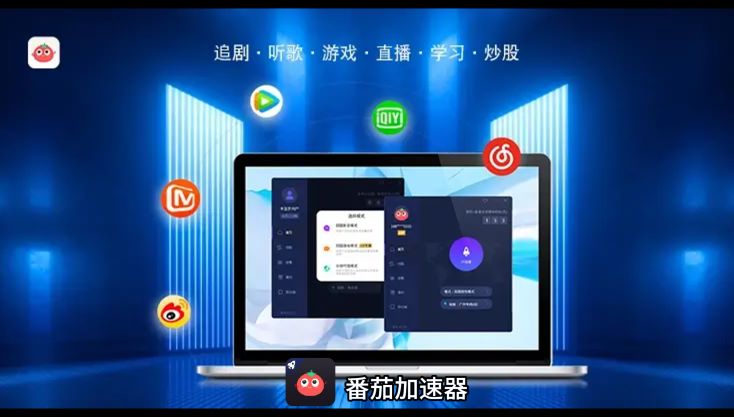
The number and location of a VPN’s nodes matter a lot. You need nodes that are close to mainland China (like Hong Kong, Singapore, or Tokyo) to minimize latency. For example, Tomato Accelerator has a global network of nodes, including multiple in key regions near China, and its smart algorithm automatically picks the fastest line for your location. I tested it from London—within seconds, it connected me to a Hong Kong node that gave me a stable connection to iQIYI, no buffering at all. This is way better than some VPNs that force you to manually switch nodes and guess which one works.
Multi-Platform Support & Multi-Device Use
Let’s be real—you use more than one device. You might watch dramas on your laptop, chat on WeChat via your phone, and join work meetings on your tablet. So your VPN needs to support all major platforms: Android, iOS, Windows, Mac. Tomato Accelerator checks all these boxes, and even better, it lets you use one account on up to 5 devices at the same time. I use it on my iPhone, MacBook, and iPad—no need to buy separate subscriptions, which saves me a ton of money.
Stability, Unlimited Traffic & Dedicated Lines
Nothing is more frustrating than a VPN that drops mid-episode or slows down when you’re gaming. Tomato Accelerator offers stable unlimited traffic—so you can stream 4K videos all day or play Genshin Impact for hours without worrying about data caps. It also has smart分流 (split tunneling), which lets you choose which apps use the VPN. For example, I set it to only route iQIYI and WeChat through the VPN, while my local email and Netflix use my regular internet—this saves bandwidth and keeps things fast. Plus, it has dedicated lines for影音 and gaming: the video line is optimized for iQIYI, Tencent Video, and Bilibili, and the gaming line gives you 100M独享 bandwidth, so you get zero lag in Honor of Kings or League of Legends.
Data Security & Privacy
When using a VPN, you’re trusting it with your data. Tomato Accelerator uses AES-256 encryption, which is the same level of security used by banks. It also uses专线传输 (dedicated transmission lines), so your data doesn’t pass through public networks—this means no third parties can snoop on your activity. I’ve checked vpn测评网站 reviews, and users consistently praise Tomato for its strong privacy policies (no logging of your browsing history).
After-Sales Support & Professional Team
Even the best VPNs have issues sometimes. Last month, I had a problem connecting to a gaming server—so I reached out to Tomato’s customer support via live chat. They responded within 5 minutes, walked me through troubleshooting steps, and fixed the issue in 10 minutes. Their team is available 24/7, and they have a knowledge base with step-by-step guides for common problems. This is a big plus compared to some VPNs that take days to respond.
Malus vs. Tomato: Which Is Better for 回国 Access?
A lot of people ask: Malus和回国哪个好? I’ve used both, and here’s my take. Malus is a popular option, with a clean interface and easy setup. But from what I’ve seen on vpn测评网站, Tomato has a few key advantages. First, Tomato offers more multi-device connections (5 vs. Malus’s 3). Second, Tomato’s dedicated gaming lines are more stable—Malus sometimes lags during peak hours for games like Honor of Kings. Third, Tomato’s smart routing is faster for users in Europe and North America, according to vpn测评网站 speed tests. That said, Malus is a solid choice if you only need basic access, but if you want the best performance for streaming and gaming, Tomato is the way to go.
Step-by-Step Guide to Set Up Your VPN
Setting up a VPN for Chinese access is easier than you think. Here’s how to do it with Tomato Accelerator:
1. Go to the Tomato Accelerator website and sign up for an account. They offer a 3-day free trial, so you can test it before committing.
2. Download the app for your device (Android, iOS, Windows, Mac). The download links are on their website, and the installation is straightforward.
3. Open the app and log in with your account. The app will automatically detect your location and recommend the best node—just click “Connect.”
4. Once connected, open your favorite Chinese app (like iQIYI or WeChat) and start using it as if you were in China. You can also use the split tunneling feature to choose which apps use the VPN.
Common Mistakes to Avoid
When choosing a VPN for Chinese access, there are a few mistakes you should steer clear of. First, don’t use free VPNs—they’re often slow, have data caps, and may even sell your data. Second, don’t ignore device compatibility—make sure the VPN works on all the devices you use. Third, don’t skip checking vpn测评网站—user reviews and speed tests can tell you a lot about a VPN’s performance. Finally, don’t forget to test the VPN before buying a long-term plan—most good VPNs offer free trials or money-back guarantees.
Final Thoughts

Being overseas doesn’t mean you have to miss out on the Chinese content and connections that matter to you. A reliable VPN like Tomato Accelerator can fix the geo-restriction problem, giving you seamless access to国内 apps and websites. Whether you’re streaming dramas, playing games, or joining work meetings, Tomato checks all the boxes: global nodes, multi-platform support, stable unlimited traffic, strong security, and great customer support. So if you’re looking for the best vpn推荐中国, give Tomato a try—you won’t be disappointed. Say goodbye to those annoying “unavailable” messages and hello to feeling connected to home again.